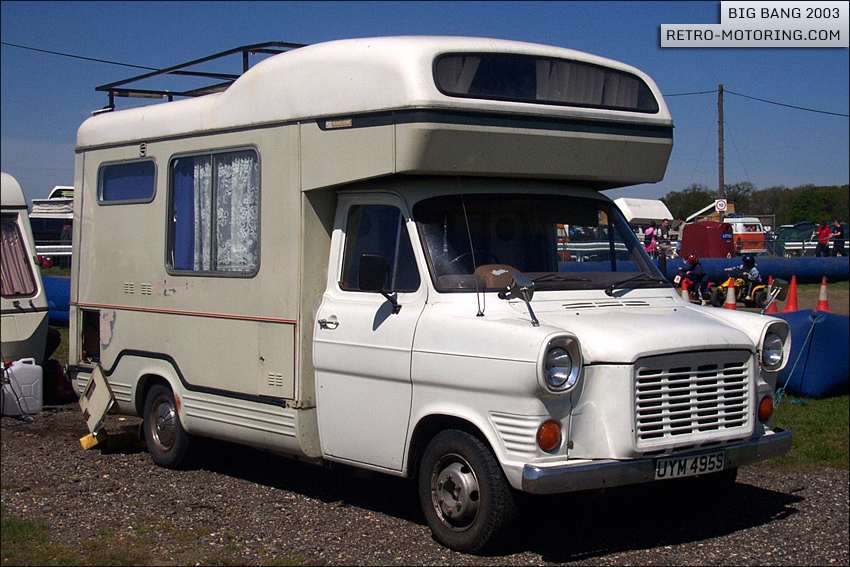
Ford : Transit Mk1
Model Introduction
The Ford Transit Mk1, launched in 1965, redefined the commercial van in Britain and across Europe, combining American-style versatility with European practicality. Developed jointly by Ford of Britain and Ford of Germany, it replaced both the Thames 400E and Taunus Transit with a single unified model. Its design maximised cargo space and accessibility, while the wide-track layout and car-like driving position made it easier to handle than many of its rivals. Built initially at Ford’s Langley plant in Berkshire (a former Hawker Hurricane factory), the Mk1 was available with a wide range of body styles including panel vans, pickups, minibuses, chassis cabs, and custom coachbuilt variants.
Production of the Mk1 shifted to the brand-new Southampton plant in 1972, which would go on to build Transits for decades. The model was continuously updated through its life, with facelifts to the grille, interior, and lighting, until it was replaced by the Mk2 in 1978. The Mk1 set the tone for every Transit that followed, establishing Ford as the go-to name in light commercial vehicles for generations of tradespeople, delivery drivers, and specialist vehicle builders. Today, Mk1 Transits are rare survivors but increasingly sought-after by collectors, restorers, and custom van enthusiasts alike as symbols of a working-class hero that helped build Britain’s roads, homes, and businesses through the latter half of the 20th century.
Magazine Articles
-

Ian Fraser views the Lake District... Through a camper dankly
-

Commercial Vehicles!
Supervan Sampled
-
TG's Home Brew
Martin Sharpe - V8 Transit